Production-led design
Review shifts, weekends and seasonal shutdowns. Distinguish motor starting requirements and critical loads from average energy consumption.

Solar planning for production schedules, heavy loads and complex sites.
Industrial solar installation requires more than a large roof. Factories, workshops, cold stores and warehouses need a design that considers shifts, process loads, distribution equipment and safety. Resicon Energy assesses these before proposing capacity and scope. Share drawings, bills and production schedules early to identify integration work, shutdown needs and approval constraints before procurement.
Explore your solar potential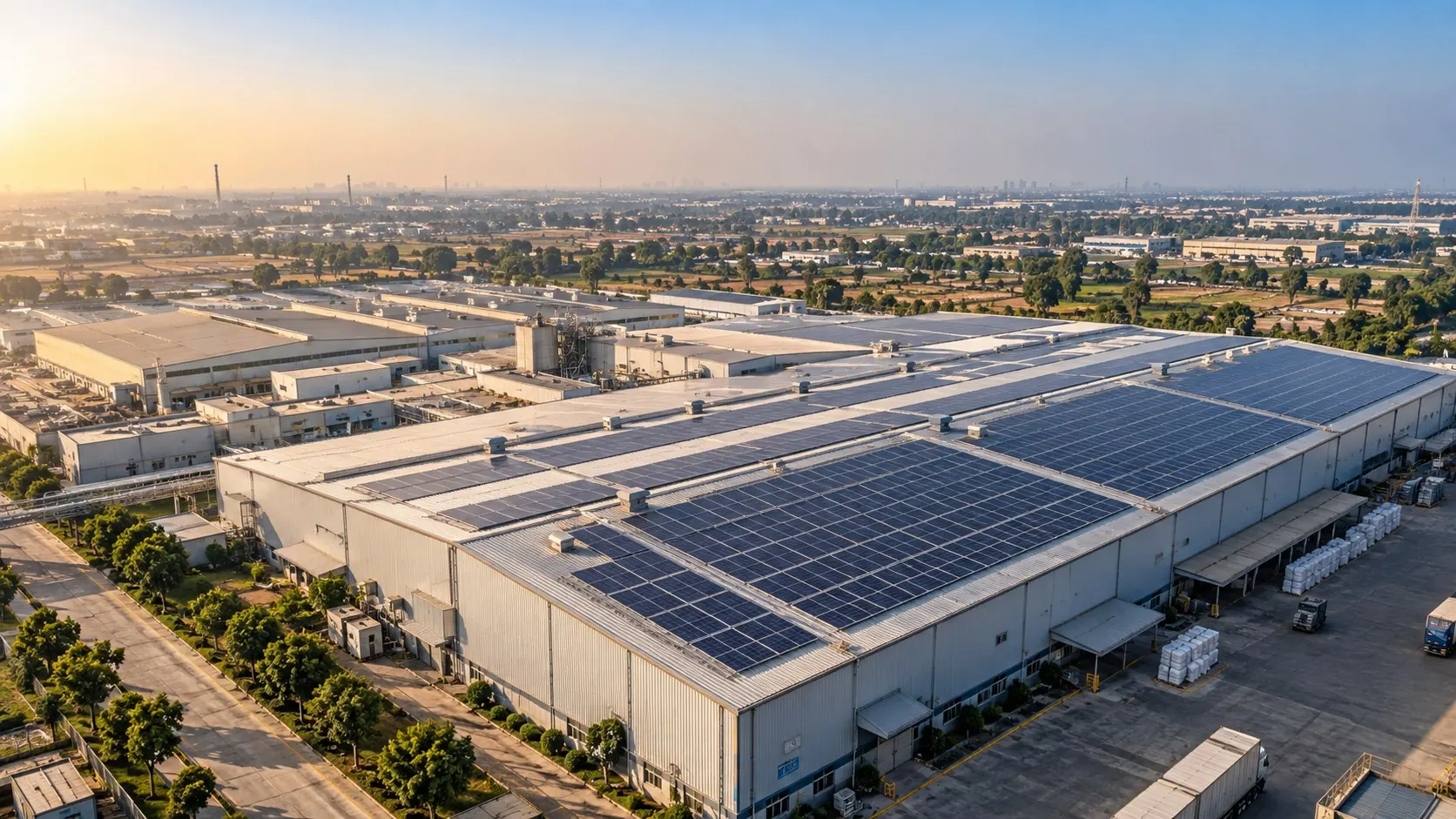
Review shifts, weekends and seasonal shutdowns. Distinguish motor starting requirements and critical loads from average energy consumption.
Check space, structure, drainage, access and existing services. Identify strengthening or civil works before finalising layout.
Identify connection point, distribution equipment and protection. State required cabling, switchgear and connection upgrades.
Solar and generator operation needs a compatible engineered arrangement. Assess controls, isolation and limits rather than assuming compatibility.
Agree measurements, reports and alerts with maintenance staff. Specify additional meters, communications and controls where required.
Define engineering, procurement, civil works, installation and approval scope. Include operating documents and commissioning records.
Clear steps, from the first conversation to a working system.
Review bills, production hours, drawings and demand measurements with the responsible team.
Check space, connection, structure and interaction with existing backup supplies.
Approve specifications, drawings, responsibilities and commercial assumptions before orders.
Plan deliveries and isolation around production. Record inspections and design changes.
Complete testing, explain limits and provide maintenance documentation.
Solar can contribute to demand, but design must account for starting requirements and operating patterns. Serving a grid-connected factory differs from keeping machinery running through an outage. Share motor ratings before sizing backup.
Suitability depends on structure, condition, remaining life, access and shade. Lightweight roofs and older buildings need attention to mounting. Identify structural review and repairs before installation.
Sometimes, with a compatible design. Review generator loading, output controls, protection and changeover together. Do not assume a standard grid-connected inverter is suitable for a generator-backed supply without assessment.
Some work needs access restrictions or planned shutdowns. Connection point and upgrade scope determine the extent. Agree isolation windows, responsibilities and commissioning tests with production staff.
Compare capacity, models, drawings, structure, protection, monitoring and warranties. Check inclusion of civil work, taxes, approvals and commissioning. Forecasts should show assumptions alongside the headline return.
Permission and capacity depend on the regulatory route, connection and utility assessment. Confirm these before relying on export income. Self-consumption designs also need to consider low-demand periods and export-limiting requirements.
Get a free initial conversation about your electricity use, system options and site survey. Share a few details and our team will follow up.
No bill document is required here. Our team can arrange a secure way to review it with you.
Start with a conversation. We’ll help you understand your space, your energy needs, and your next step.
Or call +92 300 0403826